If you do a deep dive into the research surrounding small group instruction, you’ll find teachers divided—some are Team Whole Group all the way, and others are firmly Team Small Group. So what’s the best way to teach phonics, decoding, comprehension, vocabulary, and all the things?
After twelve-plus years as a kindergarten and special education teacher, I’m convinced it’s a mix! Whole group instruction (when thoughtfully planned) helps me hit a ton of objectives with all my students. I’ve seen so much learning happen right there on the rug during shared reading and phonics routines!
But for all my students—yes, even the high flyers—whole group instruction just isn’t enough. That 15-minute window I carve out each day for small groups? That’s where the real magic happens. It’s where I can zoom in on what each student truly needs. So let’s talk about a few must-dos to make your Science of Reading small groups just as powerful.
1. Assess Your Students
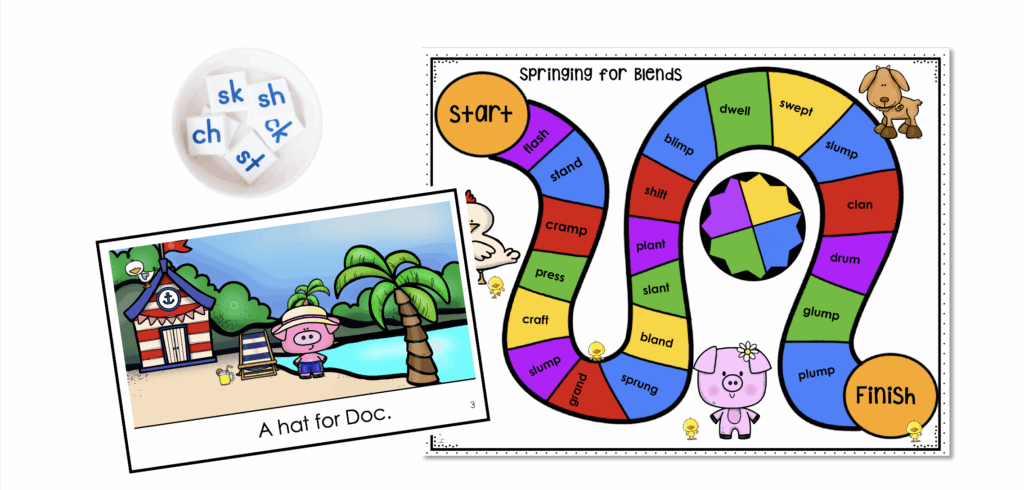
The first thing I do to create Science of Reading small group magic is assess. I use this free phonics assessment (you can grab it along with my small groups start-up guide!).
Since I teach kindergarten, I start with just letter identification and sound knowledge, but you’ll want to assess additional skills if you teach first or second grade. Once assessments are complete, I grade them and sort them in order by percentage correct. Then I group students with similar needs.
This part is a little like putting together a puzzle. You’ll juggle student needs, your available time, group sizes, and other classroom realities. And guess what? Your groups are not set in stone. Mine usually shift after the first week, once I see how students perform with actual texts and activities.
2. Prep Your Decodable Texts
Decodable texts are a must for early readers. They provide authentic opportunities to practice reading words and sentences with the phonics patterns you’re teaching.
Some experts recommend 100% decodable texts—meaning every word in the text follows patterns the student has been explicitly taught, along with a few sight words. Others suggest that 70–100% decodability still supports effective learning. In my experience, it depends on the student.
For students with reading difficulties, that 100% decodability is essential. For others, a slightly lower percentage with a few “stretch” words can actually accelerate progress. The key is knowing your students and using a set of decodable readers that work for your class.
If you want to take a deeper dive into Decodable Texts, check out this blog post!
3. Plan for Repetition and Routines
Once your groups are set and you’ve chosen the right decodables, the next must-do is planning predictable routines with lots of repetition.
Beginning readers thrive when they know what to expect. Whether it’s a Monday routine of introducing the phonics focus and vocabulary, or a Thursday routine of rereading and writing about the same text, consistency builds confidence. Plus, it saves you time. You’ll spend less energy reinventing the wheel and more time actually teaching.
Here’s a quick peek at my small group routine:
- Day 1: Introduce the phonics skill and vocabulary
- Day 2: Preview the book and do a first read
- Day 3: Reread with comprehension focus and include writing
- Day 4: Reread again with fluency and extension work (like sentence building or dictation)
This structure lets me revisit the same text multiple times while keeping it fresh and purposeful. And the repetition? It helps students internalize the phonics patterns and improve their fluency each day.
Ready to Dive In?
Small group instruction can feel overwhelming at first, especially when you’re trying to align it with the Science of Reading. But once you assess your students, choose the right texts, and stick to a predictable routine, you’ll start to see that magic unfold.
If you’re looking for a done-for-you set of decodable readers and passages that align with best practices—and save you a ton of planning time—take a peek at my Science of Reading Decodable Readers & Passages. They’ve helped me streamline my small groups and bring targeted instruction to life for all kinds of learners.
You’ve got this! 🎉

No Comments