It’s almost time to set up your classroom for the new year, and you have so many ideas! New centers, fresh new border, and Science of Reading essentials? You might be feeling a tad overwhelmed. Should I keep my word wall? How big does the sound wall need to be? Do I have space for a decodable book library?
I’ve been there! But, you may not have to make all that many changes. I want to share a few things that I did to create a Science of Reading classroom and help instruction feel manageable. Your classroom can be ready to go with a few key components.
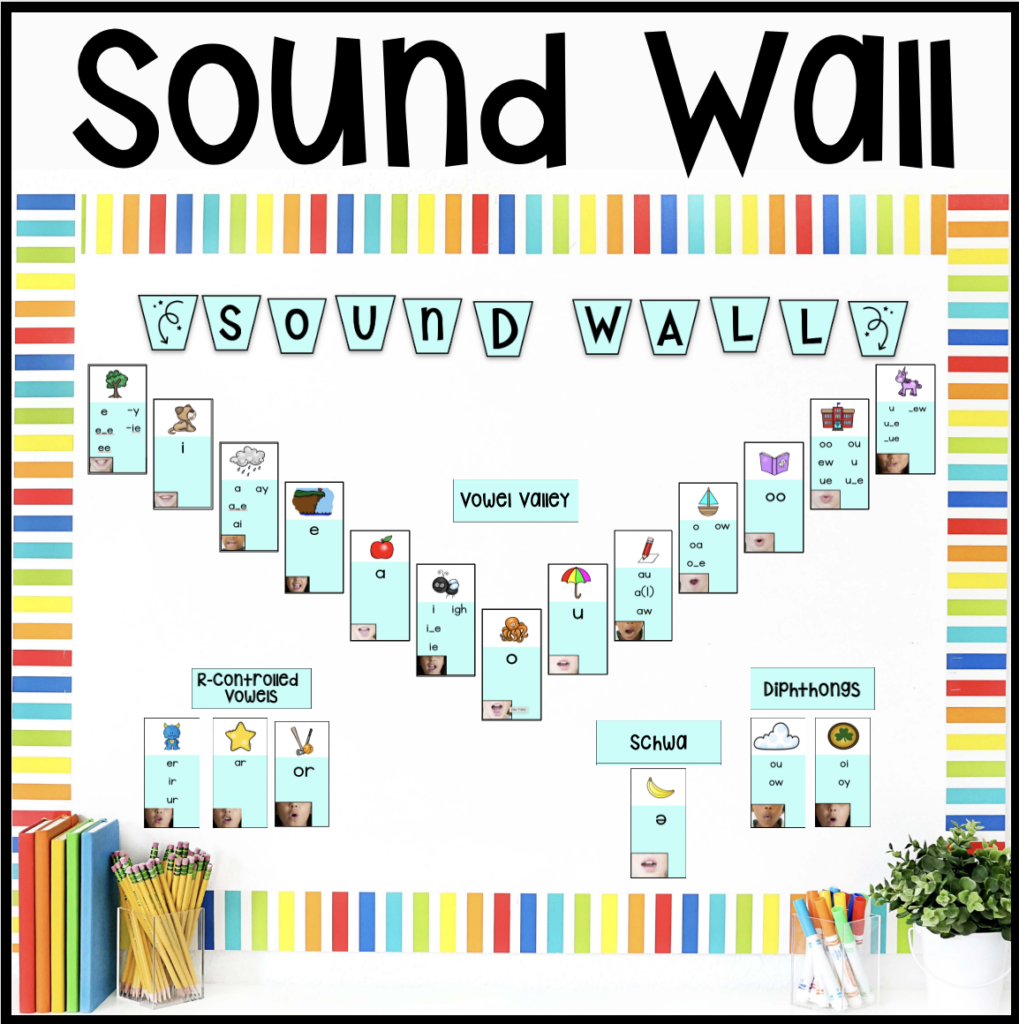
And I can help you get started with a FREE Sound Wall!
It’s the perfect tool for any SOR Classroom!
Now back to your physical space!
Organize Your Whole Group Teaching Space
Explicit instruction is at the heart of SoR. And so much can be done, as a whole group. We have a big carpet at the front of our classroom as well as a SMART board. This is where so much of our learning happens! I also have materials close by for these components:
- Phonemic awareness practice Heggrety, activities for beginning, middle, and ending sounds, syllables, and more!
- Phonics lessons with letter cards, student white boards, markers, multisensory tools, scrap paper, and pencils too.
- High-frequency word instruction (based on orthographic mapping, not memorization)
- Decodable reading practice: I have a tpt store full of great decodables if you need to add to your classroom!
- Comprehension development: picture books, poems, and nonfiction text for read aloud.
Create a Sound Wall that Students will Actually Use
Unlike a traditional word wall, a sound wall is organized by phonemes rather than beginning letters. It reflects how words are spoken—which aligns beautifully with the Science of Reading approach.
You can grab one for FREE at the top of this post!
Setting up a sound wall early in the year helps students connect the sounds they hear with the graphemes (letters or letter combinations) that represent them.
Tips for making your sound wall useful:
- Introduce sounds systematically as you teach them
- Use mouth visuals to help students see articulation
- Refer to the sound wall often during whole-group and small-group lessons
This is a hard one to incorporate for some teachers, myself included, but I am amazed at how much my kindergartners can and do use it when I take the time to teach them how! To make sure I do this, I schedule time in my lesson plans to learn how to use the sound wall. One easy way to do this is to find the sound we are focusing on in phonics that week when I introduce it.
If you would like to grab the sound wall I use in my classroom for FREE, just click here!
Design Literacy Centers with Purpose
I do not start centers as soon as school starts, but I do like to have my spaces for centers designated. If you do not have a lot of space to set up designated center spaces, there are a few things you can do to make them work in a small space!
- Center tubs that students can grab and take to their seats or a carpet area
- A center table or counter space with many activities for students to choose from
- Get creative with your space! One of my students’ favorite center spots is under our classroom counters. It’s a cozy little cubby hole that is just their size, and in clear view of my small group table, so I can easily see them at all times!
- Special cushions or pillows that students can use to move center activities around the room
Build an Efficient Small Group Area
Small group time is where the magic happens. You’ll want a dedicated space that’s free from distractions and easy to manage.
Here are a few things to include:
- A small table or desk for you and a few students
- Bins or drawers with decodable readers, whiteboards, dry-erase markers, and manipulatives
- A caddy with tools like sound boxes, magnetic letters, and phoneme cards
- Printed lesson plans or quick guides you can grab and go
Like centers, I do not begin small groups at the very beginning of school. I start them as soon as possible, though, and find it super helpful to have the space already planned for.
Organize Decodable Texts by Skill
A Classroom designed for the Science of Reading emphasizes explicit, systematic phonics instruction. That means your materials should support the skills you’re teaching in a clear, intentional order.
Start the year with decodable texts that match your phonics scope and sequence. Avoid leveled books that encourage guessing and instead focus on texts that give students real opportunities to apply what they’ve learned.
If you’re ready to spend less time searching for decodable texts and more time teaching, my Science of Reading Decodable Readers & Passages for Small Groups are designed to make small groups simple. They’re already aligned to phonics skills, include comprehension support, and require very little prep—so you can focus on your students instead of planning.
Build in Flexibility for Differentiation
Even with a great plan, every group of students is different. Setting up your classroom with flexibility in mind will help you adjust your instruction as needed.
If this is your first year shifting your instruction to better match SOR, it’s okay to start small and increase as you get comfortable.
It’s also okay to change up your plan or instruction when your students need something different from what you expected. Some lessons take two or three days rather than just the one you planned. Your students may zoom through others that you allotted several days for.
One More Tool to Make It Easier…
If you’re looking for a practical, teacher-tested resource to get your reading groups up and running smoothly, take a closer look at the
➡️ Science of Reading Decodable Readers & Passages for Small Groups.
These ready-to-use decodable texts are designed for K–2 small groups and come with:
- Phonics-aligned readers and passages
- Built-in comprehension questions
- Vocabulary support
- Print and digital formats
- Low-prep organization for busy teachers
Here’s what other teachers are saying:
“I finally feel like I’m teaching reading in a way that makes sense—and my kids are thriving. This is one of my most-used resources.”
“Everything I need is in one place. No more searching for just-right decodables every week!”
Grab the resource here:
🔗 Science of Reading Decodable Readers & Passages
Free Bonus to Help You Get Started
Want a head start on small group planning?
📥 [Grab this free Small Group Lesson Planning Template]
It’s the perfect tool to keep your groups focused and your instruction aligned with SoR best practices.
Your Classroom is Going to be AMAZING!
Setting up your classroom for the Science of Reading doesn’t mean starting from scratch or throwing out everything you’ve done before. It means being intentional—choosing materials that support structured literacy, designing routines that foster explicit instruction, and creating a learning environment where every student can grow as a reader.
You’ve got this. And I’m here to help make it easier. 💛


No Comments