How I Use Reading Fluency Folders in Kindergarten
The first few minutes of the morning truly set the tone for the day—at least they do in my classroom. How about yours?
This important part of the day starts when I greet my students at the door and direct them into the classroom to put their things away and begin their day. As much as I wish I could sit down and spend time with each kiddo, I’ve got a checklist from admin to get through. Those sweet kindergarten kiddos need something meaningful they can do independently for a few minutes!
Enter familiar reading fluency folders.

Let’s take a closer look at the benefits of familiar reading folders and how to get them started in your classroom.
They Build Independence
Grabbing a folder, opening it, and putting it away helps kindergarteners build independence. These familiar reading folders also give my students a meaningful task that they can do without my help.
This gives me a chance to take attendance, send the lunch count to the cafeteria, and check those morning tasks off my list.
Just as importantly, students learn routines and responsibility. The more ownership they take over their materials and learning, the smoother mornings become.
They Build Reading Fluency
Perhaps most importantly, these folders build reading fluency and stamina.
Students are rereading and practicing texts that they have already read with you. Hopefully, they have worked through most of the tricky parts and can focus on reading more smoothly, accurately, and with expression.
Repeated reading is supported by Science of Reading research because it helps strengthen word recognition and frees up students’ brainpower for comprehension. When students no longer have to work so hard to decode every word, they can focus on understanding what they are reading.
Additionally, students get repeated exposure to words they have already practiced and mapped with you. This helps them begin to automatically recognize those words instead of stopping to sound them out every time they see them.
Over time, this repeated practice supports orthographic mapping—the process that helps words become stored in long-term memory for instant retrieval.
As I mentioned, I use these in kindergarten, but they can be used in older grades too!
Pro Tip: Build Stamina Slowly
Reading stamina doesn’t develop overnight.
Just like a runner trains for longer distances over time, young readers need opportunities to gradually increase how long they can stay engaged with text.
Start small and celebrate growth along the way.
Choose Your Materials
You can use folders, binders, book baskets, or any other convenient storage system to create your fluency folders.
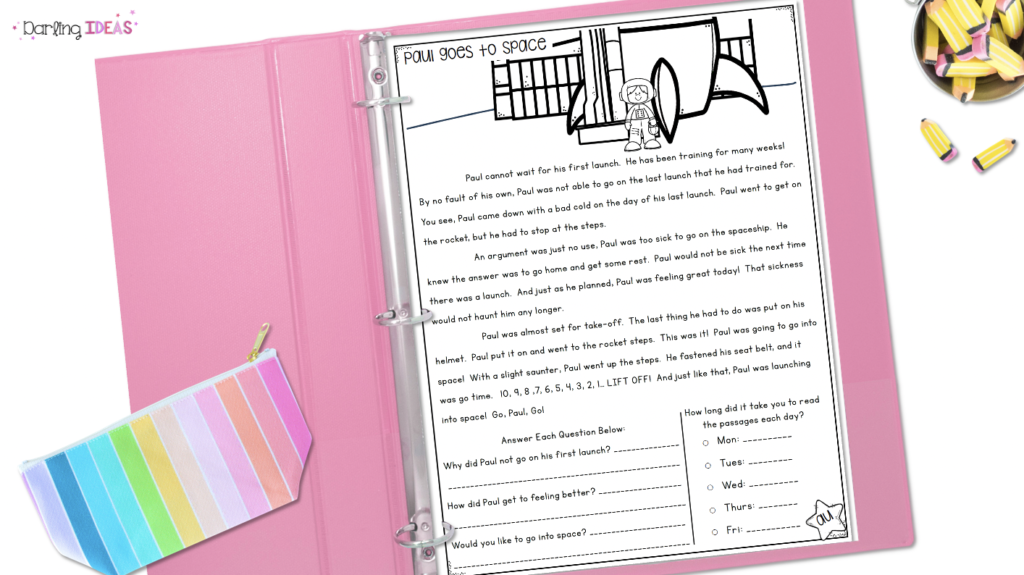
I currently like using a three-pronged folder with page protectors, but I have used binders and book baskets with great success, too.
At first, it can be challenging for kindergarteners to put papers into page protectors. Thankfully, they usually catch on quickly! I am often lucky enough to have a few students who learn the process right away and are eager to help their classmates.
At the beginning of the school year, I prep the folders with simple alphabet charts, student names, and environmental print. As students learn more words, I add those, too. If I have time, I also include heart words and CVC words we have practiced together.
Once students begin reading books and passages, those go right into the folders as well.
I use the books and passages found in my teacherspayteachers.com store for all my classroom decodables! If you are looking for some great new resources, you can check them out here!
One important tip: Only include reading materials that students can read with a high level of success. The goal of these folders is practice and confidence-building, not introducing brand-new skills.
In a Science of Reading classroom, students benefit most from rereading texts that contain phonics patterns and heart words they have already been explicitly taught. This allows them to apply their learning successfully and strengthen automaticity.
Teach Procedures and Practice
Teach your students how to store their materials and take care of them.
Teach them explicitly what reading time looks and sounds like.
Can they read independently? Can they read to a partner? Can they go on a heart word hunt?
Create an anchor chart so students have a visual reminder of exactly what they should be doing during fluency folder time.
Don’t assume students know how to use the folders just because you’ve explained it once. Model, practice, and revisit expectations often, especially at the beginning of the year.
Teach Reading Stamina
Teaching stamina is just as important as teaching procedures.
Start small. Maybe students read for only one minute at first.
Set a timer and keep it running as long as everyone is engaged in reading. Gradually increase the time by a minute or two as students become more successful.
This gradual release helps students build the endurance they’ll need for independent reading later in the year.
Celebrate Success
Reward students who are meeting expectations and taking ownership of their reading time.
My students love earning stickers for the front of their reading folders!
While the stickers are fun, the real reward is watching students become confident, independent readers who are excited to start their day with books.
A simple fluency folder may not look fancy, but it can become one of the most valuable tools in your classroom. It gives students meaningful practice, builds independence, strengthens fluency, and creates a calm, productive start to the school day.
And honestly, that’s a win for both students and teachers.


No Comments