Every October, I love finding ways to use all the fun that comes with the season to actually support what we are learning in the classroom. Pumpkins are an easy one because all kids are already excited about them! Instead of just using a pumpkin as a Halloween decoration, why not turn it into a simple science investigation? If you are reading Pumpkin Jack by Will Hubbell, this is an especially fun way to take the story a step further and let your students observe what happens to a real pumpkin over time.
If you are looking for pumpkin science activities, pumpkin observation activities, Halloween science activities, or fall science activities for kindergarten, first grade, or second grade, try turning a pumpkin into a simple classroom science experiment.
The best part?
You don’t need a complicated experiment or a long list of supplies.
You need a pumpkin, some curious kids, and a way for students to record what they notice.
Turn a Pumpkin into a Science Investigation
Instead of treating your pumpkin as just a Halloween decoration, invite your students to become scientists.
Start with a simple question:
What do you think will happen to our pumpkin over time?
Let students make predictions.
What will it look like tomorrow?
What will it look like next week?
Will the color change?
Will it stay hard?
Will it get softer?
Will we see anything growing on it?
Will it smell different?
There are no wrong predictions at this point. The goal is to get students thinking about what they already know and what they expect to happen. I like to record some of these wonders on an anchor chart to refer back to.
Then comes the fun part:
Watch and wait.
Students can observe the pumpkin regularly and document what they see.
This turns one little pumpkin into a science investigation that can continue for days or even weeks.
Pumpkin Observation Activities for K–2
I think a lot of our students are natural observers. They notice little things, ask questions, and are usually pretty quick to tell us what they see! A pumpkin investigation gives them a reason to slow down and really look.
A pumpkin investigation gives them a reason to slow down and really look.
During each observation period, it might be helpful to ask them:
- What do you notice?
- What changed?
- What stayed the same?
- What does the pumpkin look like today?
- What does it feel like?
- What do you notice about the color?
- Do you see any spots?
- Is the pumpkin hard or soft?
- Does it look the same as yesterday?
- What do you predict will happen next?
- What evidence do you have?
For kindergarten students, you may do most of the recording through drawing and oral language.
First and second graders can add labels, sentences, details, and comparisons.
The science stays the same, but what you expect students to record can look different depending on their age and ability.
That’s one of my favorite things about observation journals. Everyone can participate in the same investigation while working at an appropriate level.
Read Pumpkin Jack as a Science Connection
If you are looking for a fall read-aloud to pair with your pumpkin investigation, Pumpkin Jack by Will Hubbell is a natural choice.
The story follows a jack-o’-lantern named Jack and shows what happens to the pumpkin after Halloween as it changes and eventually becomes part of a new pumpkin life cycle.
You can read the book before beginning your investigation and ask students:
“What do you think will happen to our pumpkin?”
Or, read the book after your students have already started observing their pumpkin.
I especially like asking:
“The book showed us what happened to Jack. What do you think will happen to our pumpkin?”
Now students have a story to connect to their own real-world observations.
You can also use the book to introduce words such as change, seed, grow, decay, decompose, and life cycle.
Keep the learning going with a Pumpkin Observation Journal
Of course, one of the trickiest parts of a long-term classroom investigation is figuring out how students will record their observations.
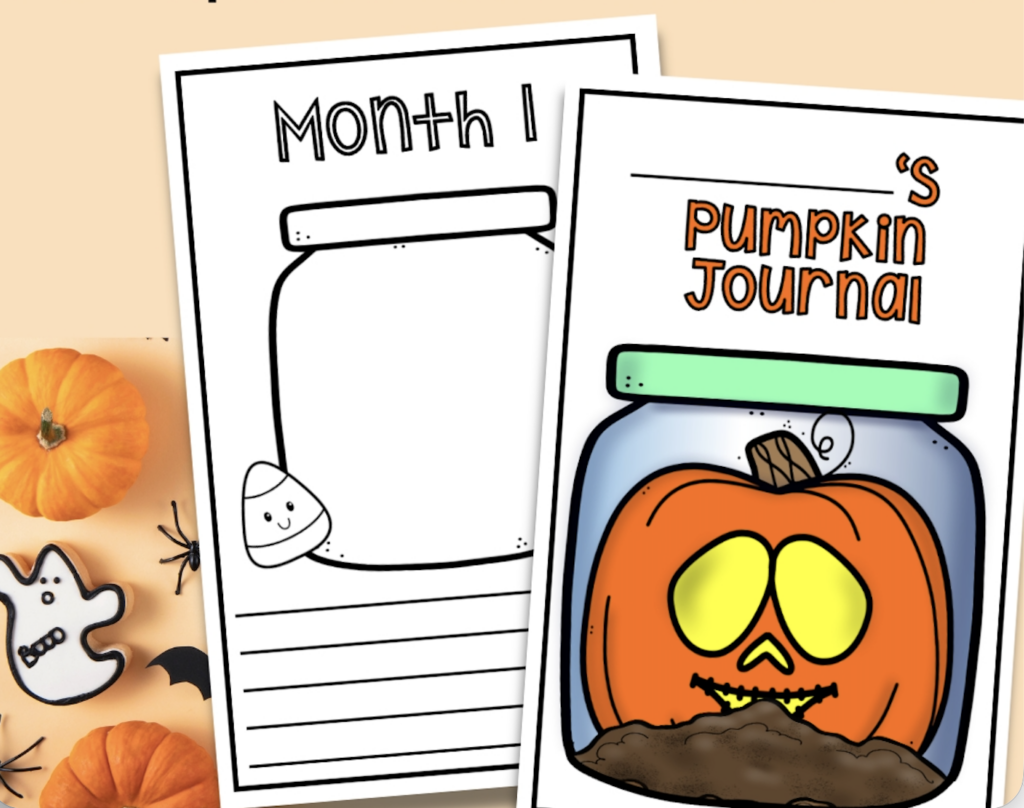
That’s why I created my Pumpkin Jack-O-Lantern Observation Book & Journal
It gives K–2 students a simple way to document what they notice as their pumpkin changes.
I included flexible options because we all know that students in kindergarten through second can have a very wide range of writers!
You can choose the pages that make sense for your students instead of requiring every child to complete exactly the same amount of writing.
Want to Try a Pumpkin Observation Journal?
If you want to try this activity with your students before purchasing the journal pages on TPT, I put together a great freebie for you!
You can use these pages as part of a whole-class pumpkin investigation, or even as an October science center.
Just grab the free pages below and let your students start observing, drawing, labeling, and recording what they notice about your pumpkin.
And if you love the activity and want more options for your students, I also have the complete Pumpkin Jack-O-Lantern Observation Book & Journal, with additional pages and different recording options to make it easy to use with a range of learners.
Connect Pumpkin Science to Literacy
This is where I think science becomes especially valuable in the primary classroom.
A science observation naturally creates opportunities for:
- Speaking and listening
- Vocabulary development
- Describing
- Comparing
- Sequencing
- Drawing
- Labeling
- Sentence writing
- Informational writing
- Making predictions
- Using evidence
For example, after looking closely at the pumpkin, ask students to complete this sentence orally:
“I can see _____.”
or “I notice ____” for older grades.
If there is time, we then write these sentences and expand on them each day in our pumpkin observation journals. Its an easy way to work on informational writing without making writing feel overwhelming. Some other ideas might be to:
Start with drawing.
Then add labels.
Then add a sentence.
Then add more details as students are ready.
For example:
Kindergarten:
“My pumpkin is orange.”
First Grade:
“My pumpkin is softer than it was last week.”
Second Grade:
“Our pumpkin has changed over time. It is softer and has spots.”
The science investigation stays the same.
The writing expectation changes.
This makes it easy to differentiate without creating completely different lessons for every student.
Set Up a Pumpkin Observation Station
I love this because I am always looking for October centers, and I often fall behind with our observation journal writing. I add a basket with journals and the container with the pumpkin. It’s also helpful and fun to have a few other things too:
- Pencils
- Crayons
- Magnifying glasses
- Science vocabulary cards
- A clipboard or tray
Students can visit the station during centers, morning work, or independent work time.
Give them one simple job:
Look closely. What do you notice?
You can even add a magnifying glass and encourage students to look at the pumpkin’s stem, skin, spots, or seeds.
This is a great way to give students meaningful science practice without adding another complicated activity to your lesson plans.
Make Your Pumpkin Investigation Easy
I love activities like this because they don’t require a lot of extra planning. You can read Pumpkin Jack, bring in a pumpkin, ask a few questions, and let your students do the observing and recording.
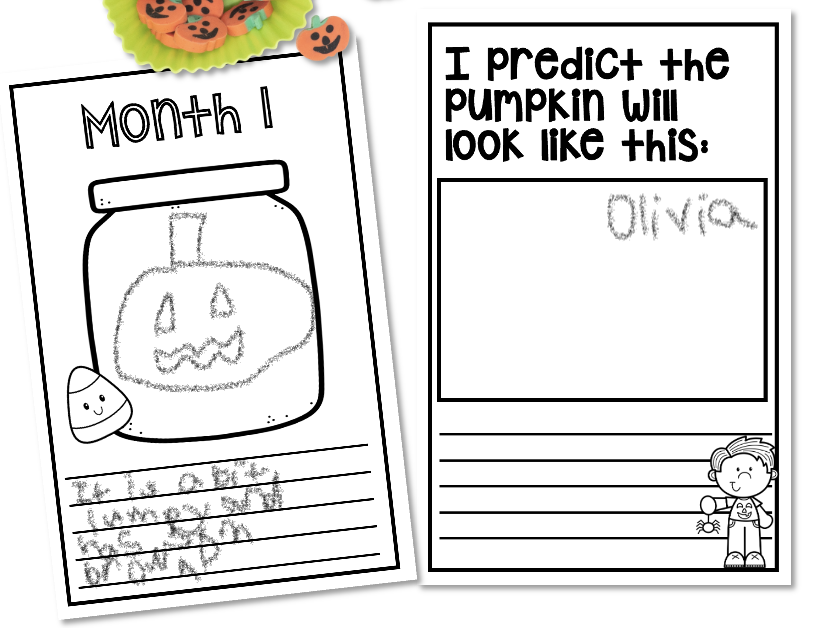
If you want an easy way to keep all of those observations together, I created my Pumpkin Jack-O-Lantern Observation Book & Journal to go along with this type of investigation. There are different options so you can choose what works best for your students.
It can be used as a whole-class science activity, in a small group, or even as an October science center.
And honestly, I think the best part is watching the students get excited to check the pumpkin and see if anything has changed!
You can find the Pumpkin Jack-O-Lantern Observation Book & Journal in my Teachers Pay Teachers store.


No Comments